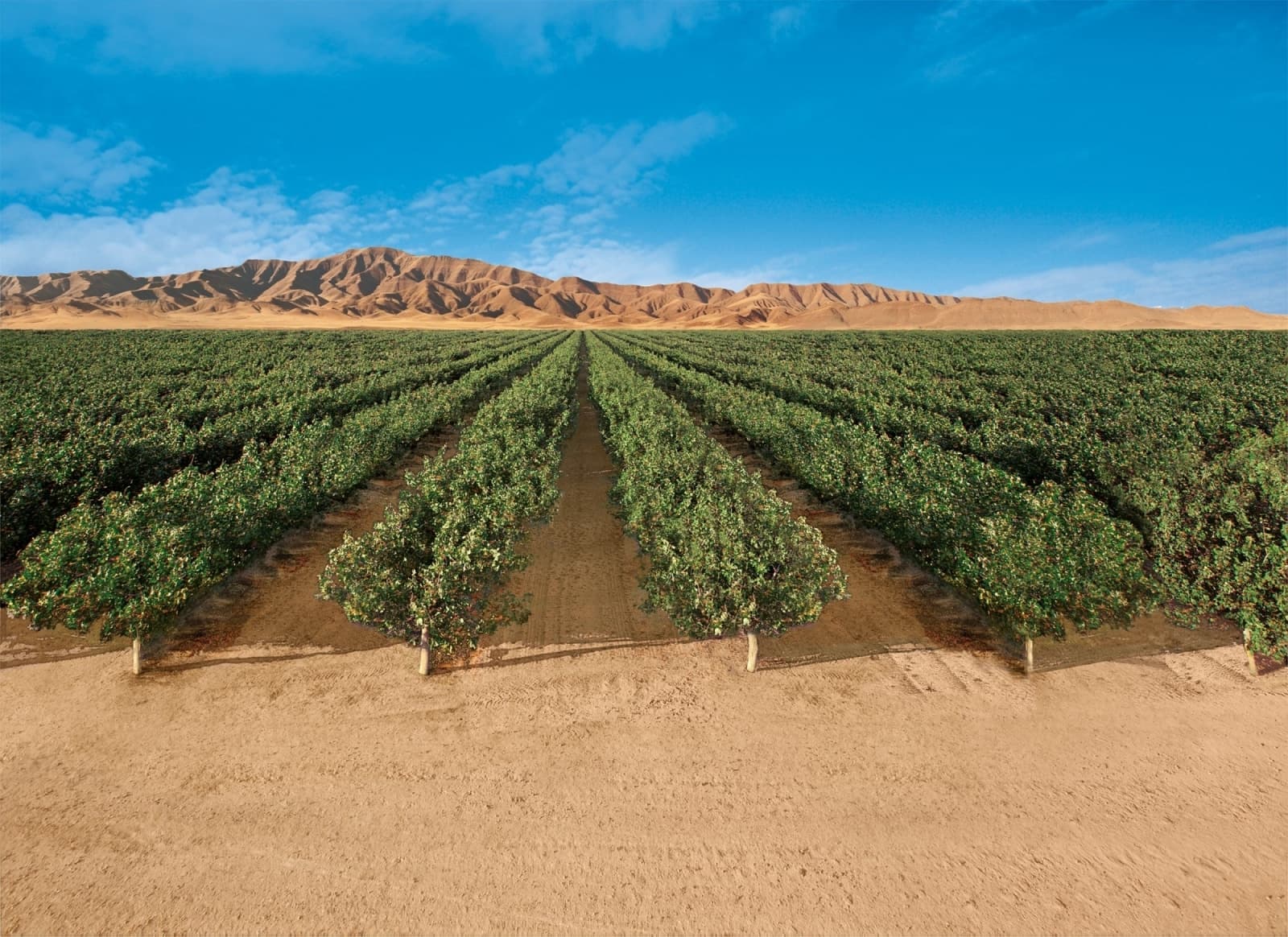
A gallon is a small unit for a decision that can reach across an orchard. Alzchem Group’s Dormex offer puts a price on each one, while the result growers care about is whether pistachio flowers set a crop.
For California growers preparing for the 2027 season, Alzchem is offering a three-dollar-per-gallon rebate on Dormex purchases. The discount attaches to the product purchase; the announcement does not describe an acreage payment.
A rebate after a difficult bloom
The offer follows challenging bloom conditions in 2026, the season that prompted the promotion. Bloom is a narrow part of the calendar with a long reach: what happens there sets the terms for the crop that follows.
Alzchem says Dormex applications reportedly improved crop setting on treated trees compared with untreated trees. That comparison is the agronomic rationale attached to the rebate, not a quantified estimate of how much more crop a grower should expect.
The distinction matters in the orchard. A reported improvement can make an input worth evaluating, but it does not tell a manager what response to expect across different blocks or conditions. The offer itself does not turn a reported result into a promise.
The purchase window is the practical constraint
For an operation considering the product, the immediate work is less dramatic than the word “rebate” suggests: establish which purchases qualify, retain the records the program requires, and compare the incentive with the operation’s planned use.
The announcement gives the rebate amount and purchase period, but the information available here does not specify a cap, claim process, or other eligibility terms. Those details can determine whether a nominal discount is useful at the scale of a particular operation.
The reported treated-versus-untreated result is worth keeping separate from the financial offer. The former is a field-performance claim; the latter is a purchasing incentive. Managers weighing Dormex will need to assess each on its own terms.